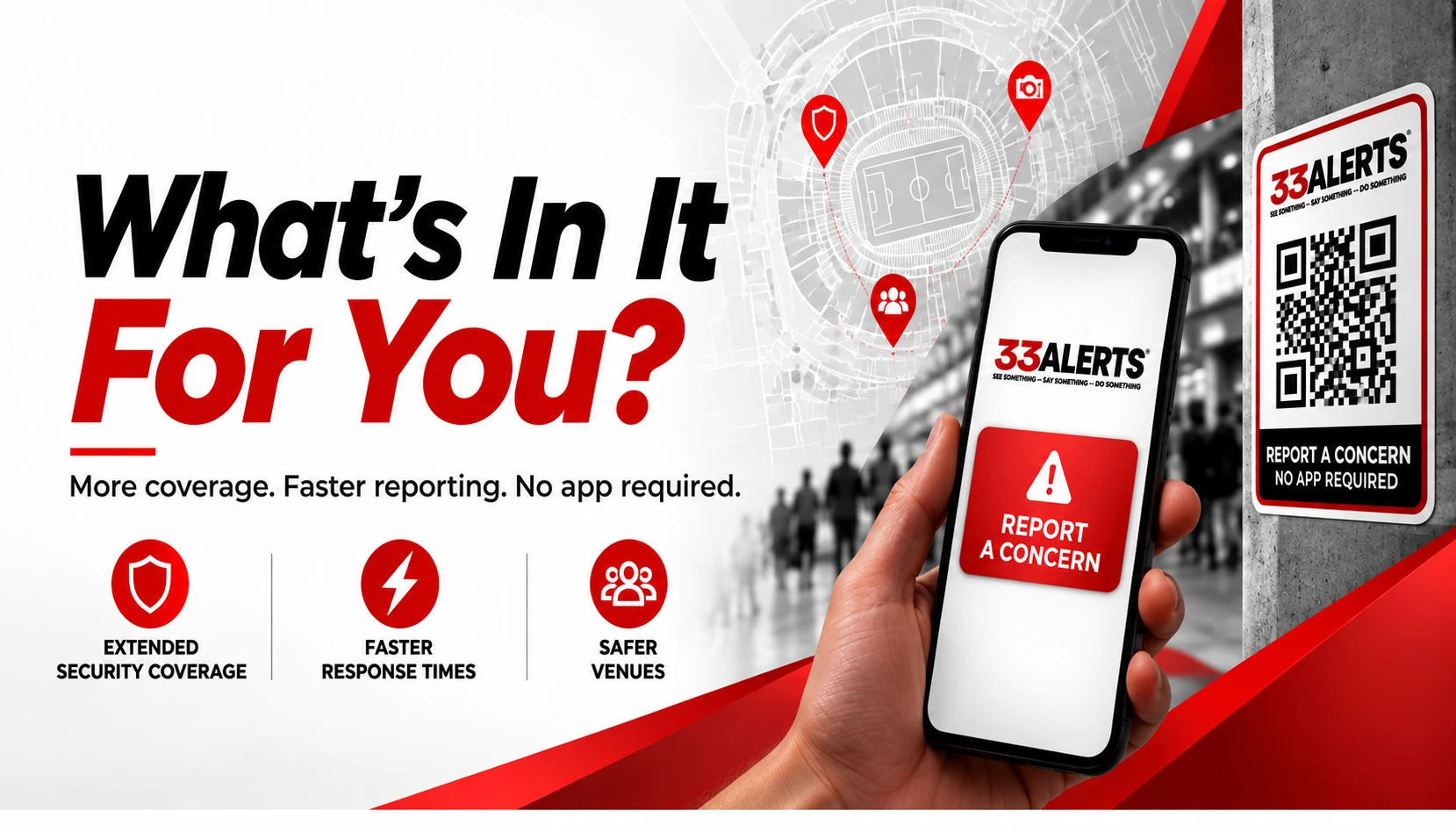
33 ALERTS gives your organization more places to receive reports, faster location information, and a simple way for guests, students, employees and visitors to report a problem without downloading an app. More coverage. Faster reporting. No 33 ALERTS app required.
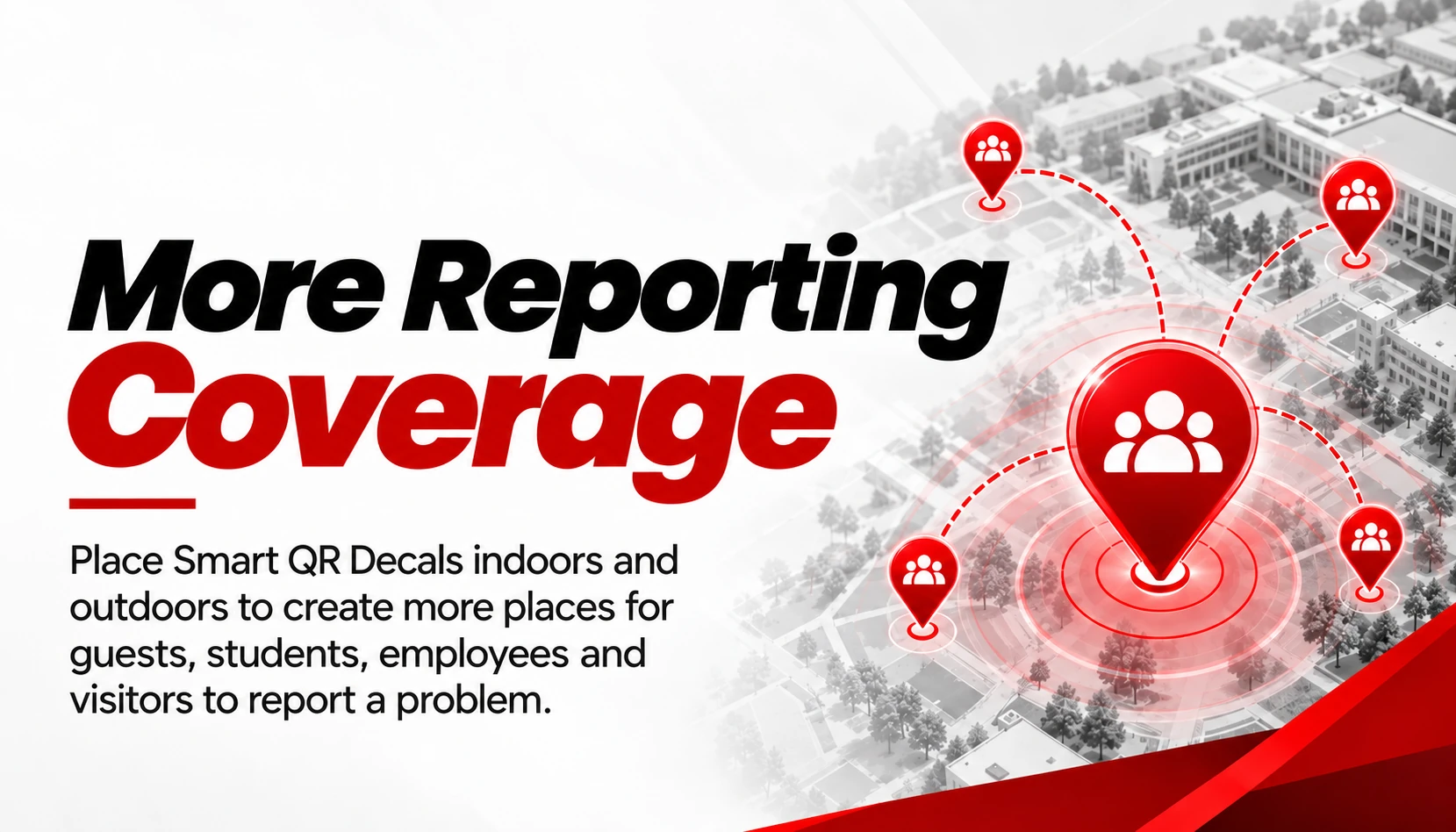
More Reporting Coverage For Your Team
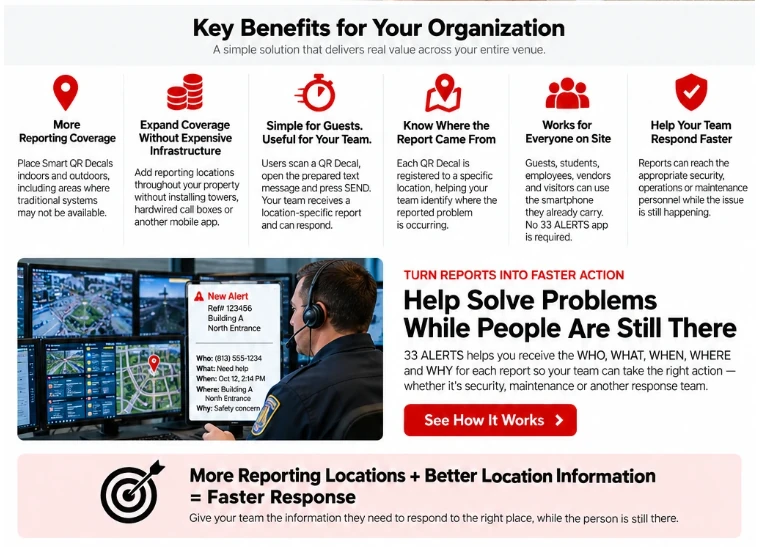
33 ALERTS Smart QR Decals can be placed throughout your property, indoors and outdoors, including locations where traditional fixed systems may not be available.
This gives guests, students, employees, vendors and visitors more places to report safety, security, maintenance and service concerns.
Expand Coverage Without Expensive Infrastructure
Add reporting locations throughout your property without installing towers, hardwired call boxes or another mobile app.
Smart QR Decals can be installed in existing spaces with minimal disruption to your operations.
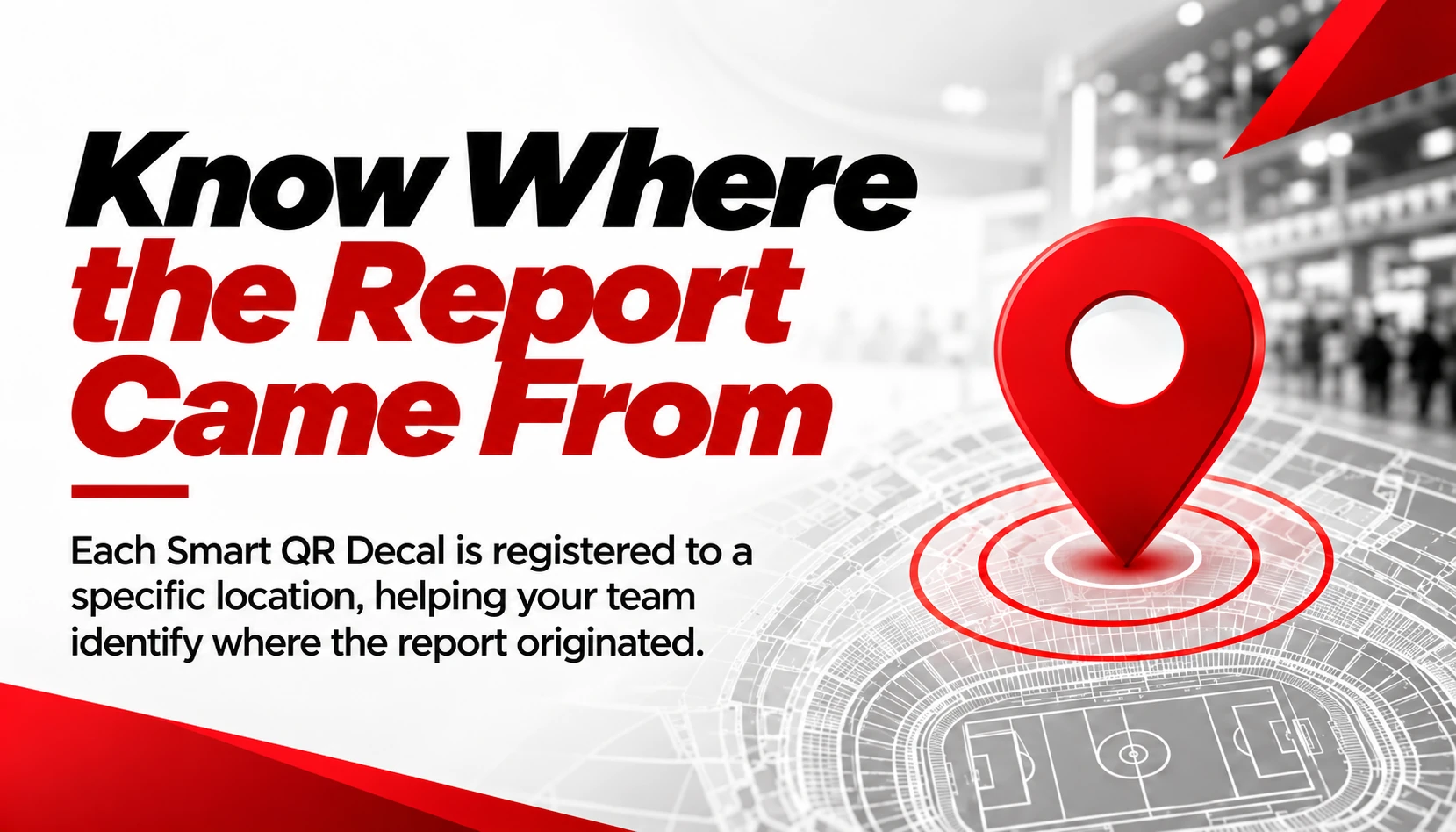
Know Where the Report Came From
Each Smart QR Decal is registered to a specific location. When someone sends a report, your team can identify where that report originated and direct security, operations or maintenance personnel to the correct area.
Guests, students, employees, vendors and visitors can use the smartphone they already carry.
No 33 ALERTS app is required, so people do not need to download, install or learn another application before they can report a concern.
Works for Everyone on Site
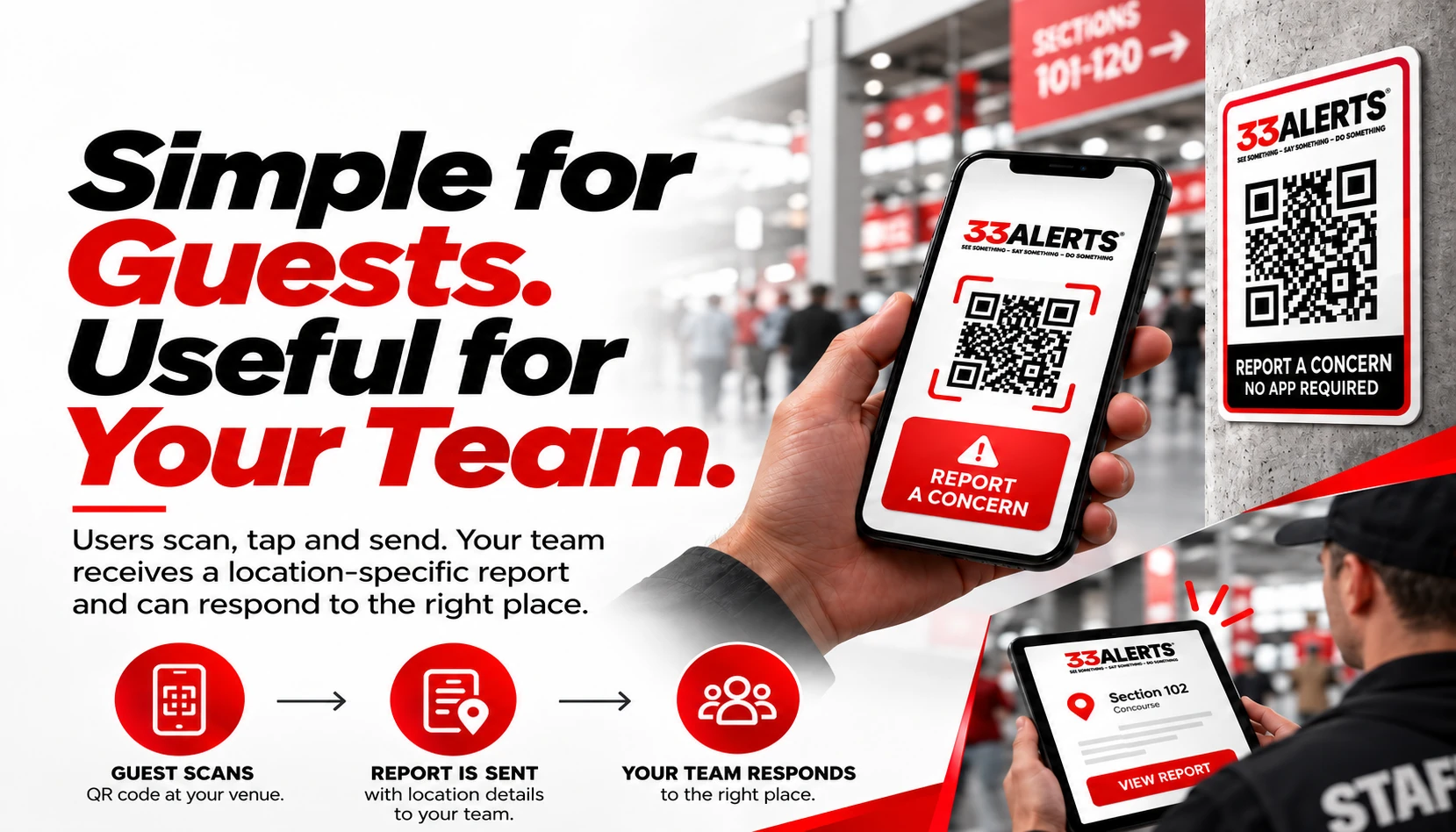
Simple for Guests. Useful for Your Team
Help Your Team Respond Faster
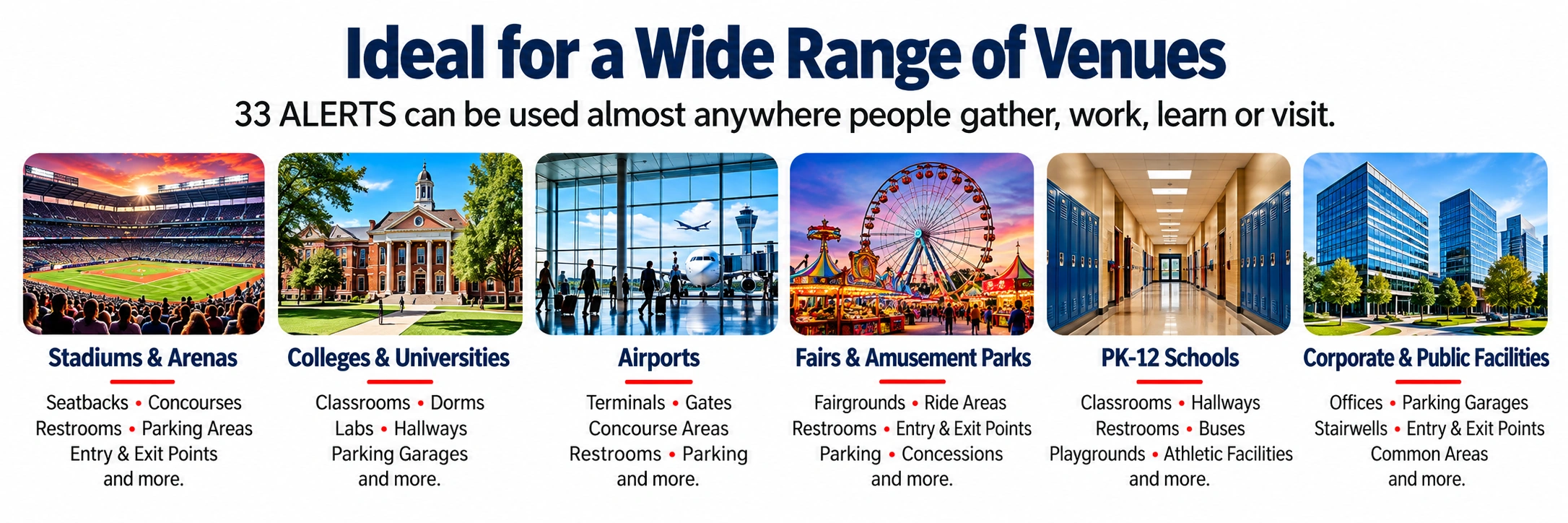
Ideal for a Wide Range of Venues
33 ALERTS can be used in stadiums, colleges and universities, airports, fairs, amusement parks, PK-12 schools, corporate facilities and other locations where people gather, work, learn or visit.
Users scan a Smart QR Decal, open the prepared text message and press SEND. Your team receives a location-specific report and can respond to the right place while the person who reported the issue is still there.
See What 33 ALERTS Can Do for Your Organization
A short demonstration can show how 33 ALERTS Smart QR Decals could work across your property and where additional reporting locations may be useful.
Better location information helps your team understand where a reported problem is happening and decide who should respond. That may be security, operations, maintenance or another response team.